What Barriers Do Women Artists Face Today in Developing Professional Careers in the Visual Arts?
-
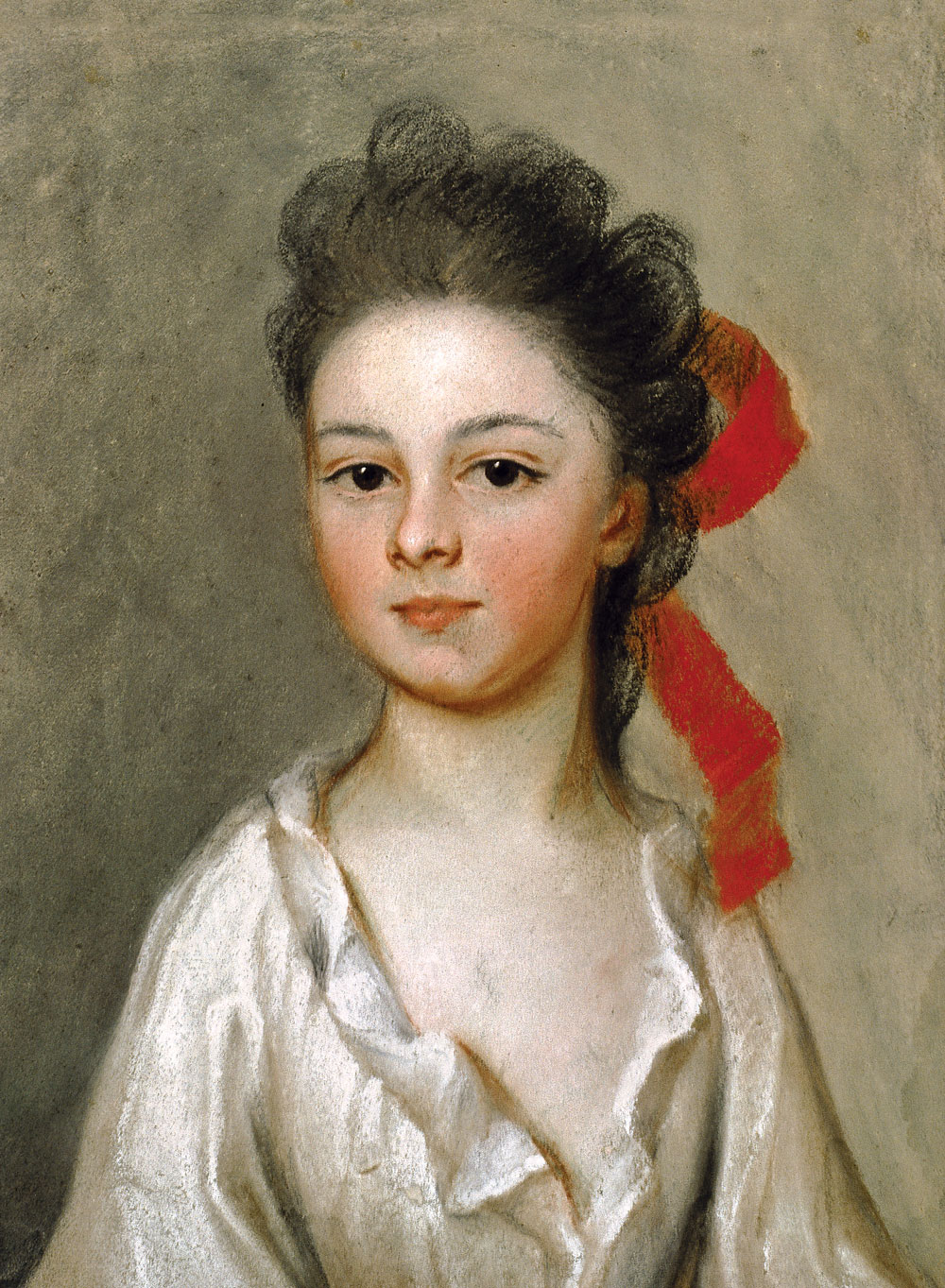
- Fig. 1: Henrietta de Beaulieu Dering Johnston (ca. 1674–1729), Henriette Charlotte Chastaigner (Mrs. Nathaniel Broughton), 1711. Pastel on newspaper, 14-two/5 10 11-3/5 inches. Gibbes Museum, Charleston, South.C., Gift of Victor A. Morawetz (1938.020.0004).
Fine art history has long been dominated by male artists. A number of factors prevented women from achieving artistic prominence, i primary among them was the fact that until the nineteenth century women were denied entrance to schools and academies, and fifty-fifty then they were non permitted to work from nude models. And while opportunities for women began to aggrandize in the tardily nineteenth century, social pressures connected to discourage women from pursuing a career in the arts. Encouraged to dabble in cartoon and painting as part of a well-rounded education, women were expected to become total-time wives and mothers—an expectation that connected well into the twentieth century.
Breaking Down Barriers: 300 Years of Women in Fine art at the Gibbes Museum of Art in Charleston, South Carolina, explores the lives and works of a number of female artists who were among the notable exceptions in a male dominated profession and whose work is now in the collection of the Gibbes Museum. The story begins with Henrietta Johnston (ca. 1674–1729), recognized every bit the first female professional artist in America. The European-born Johnston moved to Charleston in 1708 when the Church of England'southward Society for the Propagation of the Gospel in Foreign Parts appointed her husband, Gideon Johnston, commissary for S Carolina. Facing considerable financial hardships in Charleston, Henrietta helped back up her family by creating pastel portraits of social acquaintances and members of her husband's congregation. "Were it not for the assist my wife gives me by drawing pictures…I shou'd not accept been able to alive," two her married man wrote in a alphabetic character to the Club in 1709. Works by Johnston entered the Gibbes collection as early on as 1920, and the museum houses the largest public drove of her piece of work (Fig. one).
Some other significant eighteenth-century female person artist in the Gibbes collection is Angelica Kauffman (1741–1807) (Fig. 2), whose skills equally an artist were axiomatic at an early age. Kauffman was able to overcome the lack of educational opportunities for women past receiving preparation from her artist begetter, a recurring theme amidst the few successful female artists of the seventeenth and eighteenth centuries. As a immature daughter, she and her family unit moved from Switzerland to Italy, where her travels with her begetter allowed her to study classical sculpture and the paintings of the Erstwhile Masters. She spent countless hours copying such works in Milan, Florence, and Rome; an opportunity few women had in eighteenth-century Europe. After a brief first marriage, her second hubby was supportive of her career as an artist and she continued to pigment.
-
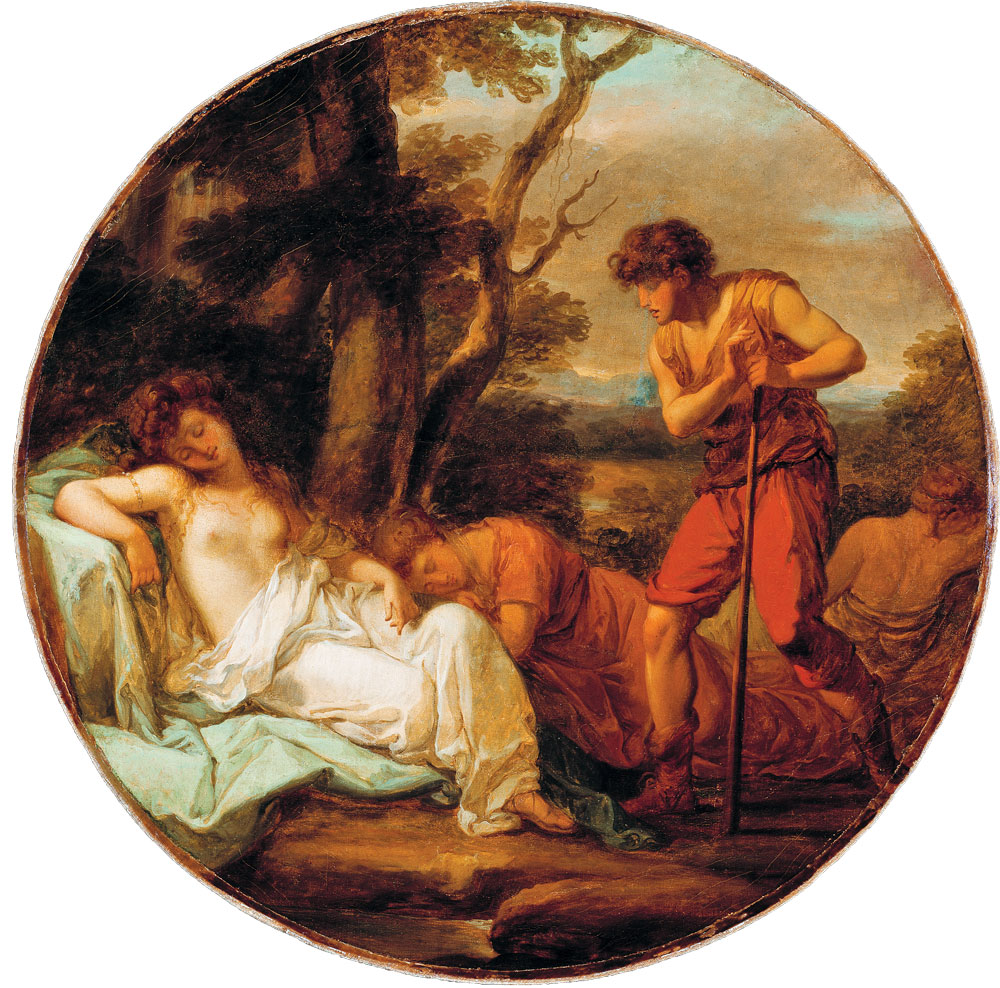
- Fig. 2: Angelica Kauffman (1741–1807), Cymon and Iphigenia, ca. 1780. Oil on canvas, 32-3/four x 32-3/four inches. Gibbes Museum, Charleston, S.C., Gift of Alicia Hopton Middleton (1937.005.0015).
-
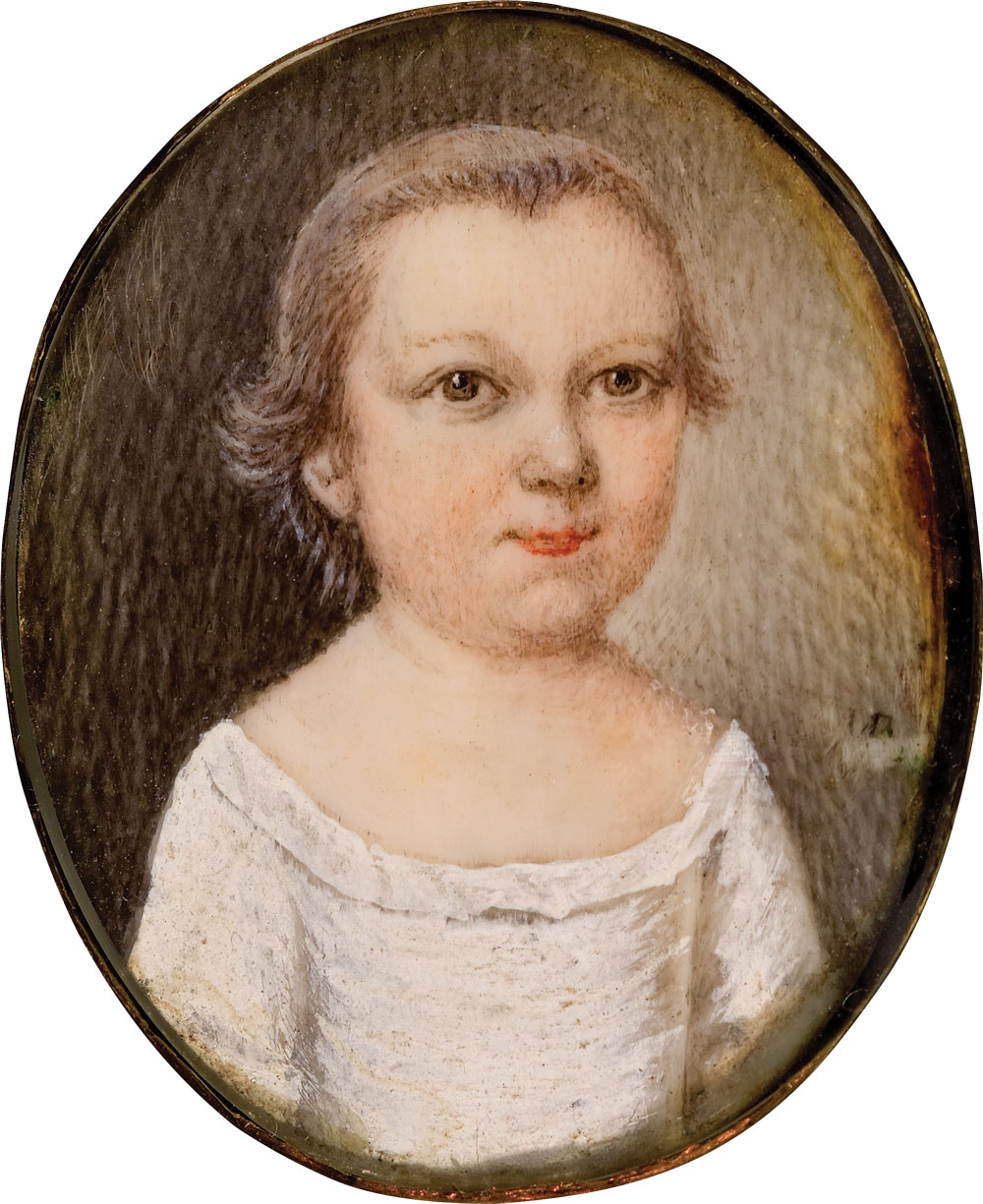
- Fig. iii: Mary Roberts (d. 1761), Unidentified sitter, ca. 1755. Watercolor on ivory, i-ane/8 10 i inches. Gibbes Museum, Charleston, S.C., Bequest of Mrs. Amelia Josephine Emanuel (1939.009.0001).
Beyond Johnston and Kauffman, few women artists of the eighteenth or nineteenth centuries are represented in the Gibbes drove, which is typical of many American museum collections. Of these early on American artists, both Mary Roberts (d. 1761) and Louisa Strobel (1803–1883) painted portrait miniatures, a genre deemed advisable for refined, educated women. Roberts is notable as the first adult female miniaturist in America (Fig. 3), and also the commencement American to paint portrait miniatures on ivory. She painted numerous miniature portraits of the prominent Middleton family unit of Charleston; each painting measuring a miniscule one and a half inches in summit. Like Henrietta Johnston, Roberts was a European who settled in Charleston, garnering support for her work from her husband, a fellow artist. Louisa Strobel did not paint professionally and just created portraits of family members and friends. Upon marrying the Reverend Benjamin Martin in 1841, Strobel stopped painting—possibly to assume her "proper" role as wife, and eventually, mother.
Women artists are better represented in the museum's twentieth-century holdings. In large function, this is due to the keen number of women involved in what is known every bit the Charleston Renaissance, which occurred between the ii World Wars, when the city experienced a resurgence in literature, music, historic preservation, and the visual arts. Among its leaders were Alice Ravenel Huger Smith (1876–1958), Elizabeth O'Neill Verner (1883–1979), and Anna Heyward Taylor (1879–1956). All iii created numerous works depicting the architecture and landscape of Charleston and the surrounding Lowcounty region. Smith is best known for her series of thirty watercolor paintings entitled A Carolina Rice Plantation of the Fifties, which includes the circa-1935 painting A Lagoon by the Sea (Fig. iv). Verner created numerous etchings of downtown Charleston in the 1920s and 1930s; subsequently in her career she focused on pastels (Fig. 5). Together, the women of the Charleston Renaissance helped shape public perception and bring national attention to the urban center's historic charm and its rich cultural heritage.
During the aforementioned time catamenia, a number of significant women photographers were employed by the Works Progress Administration (WPA), which sent millions of unemployed Americans, including more than five,000 artists, back to work during the Groovy Depression. Under the auspices of the WPA's Federal Art Project, Berenice Abbott (1898–1991) photographed the architecture of New York City for an ambitious projection entitled Changing New York (Fig. vi). Prior to that, Abbott had traveled to Charleston during the summer of 1934, afterward she was hired past architectural historian Henry-Russell Hitchcock to photograph Civil State of war-era architecture in Charleston, Baltimore, Philadelphia, and Boston.
-
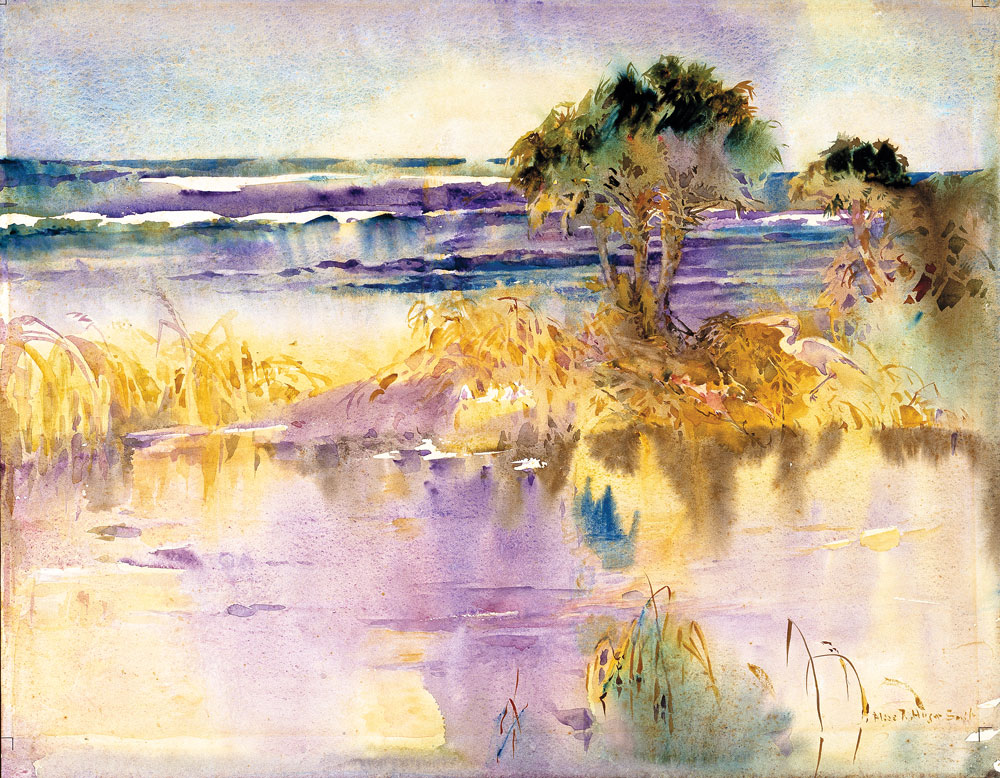
- Fig. 4: Alice Ravenel Huger Smith (1876–1958), A Lagoon past the Body of water, from the series A Carolina Rice Plantation of the Fifties, ca. 1935. Watercolor on paper, 17 x 21-5/8 inches. Gibbes Museum, Charleston, S.C., Gift of the artist (1937.009.0030).
-
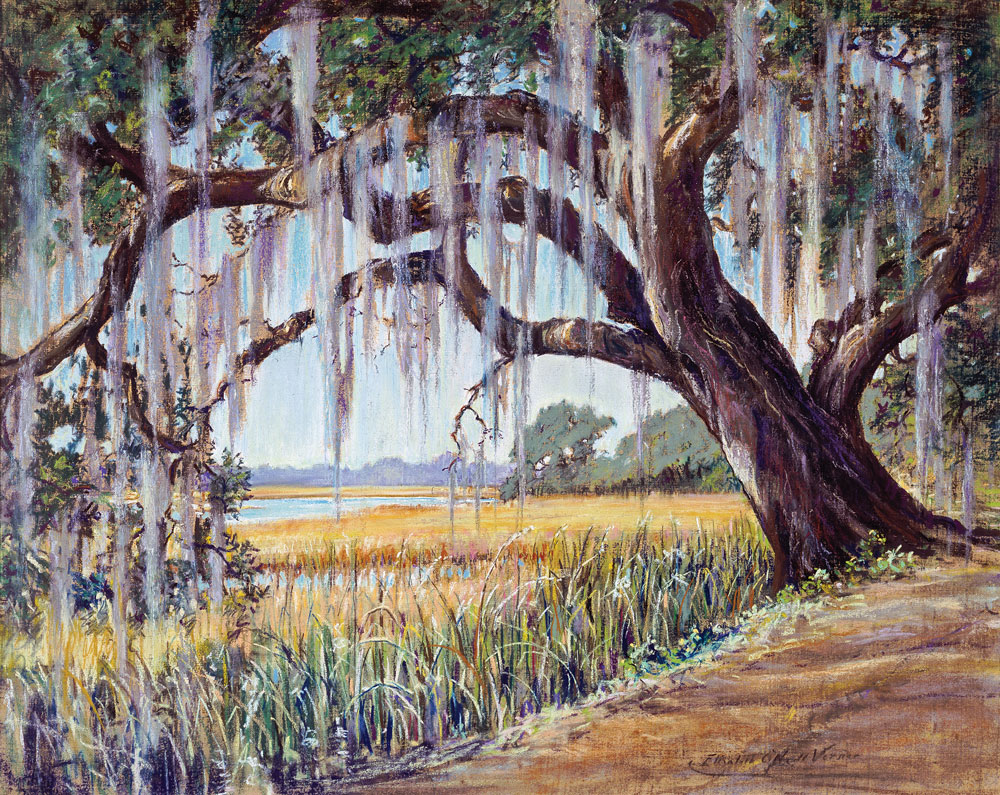
- Fig. five: Elizabeth O'Neill Verner (1883–1979), Untitled (landscape), ca. 1965. Pastel on silk on board, 31-1/4 x 34-iii/iv inches. Gibbes Museum, Charleston, South.C., Souvenir of Mr. and Mrs. Richard K. Smith (2001.001).
-
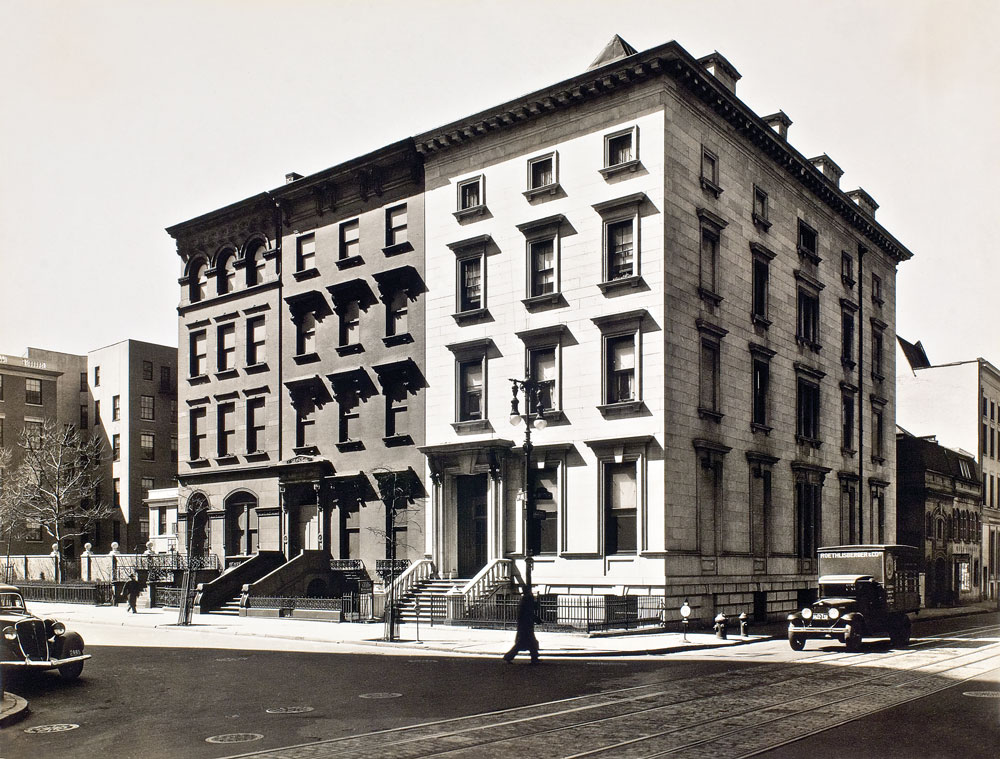
- Fig. half dozen: Berenice Abbott (1898–1991), 5th Avenue, Nos. four, 6, and 8, from the series Changing New York, 1936. Gelatin silver impress on paper, 7-iii/eight x 9-ane/2 inches. Gibbes Museum, Charleston, S.C., Gift of Mr. Robert Due west. Marks (1974.012.0008).
-
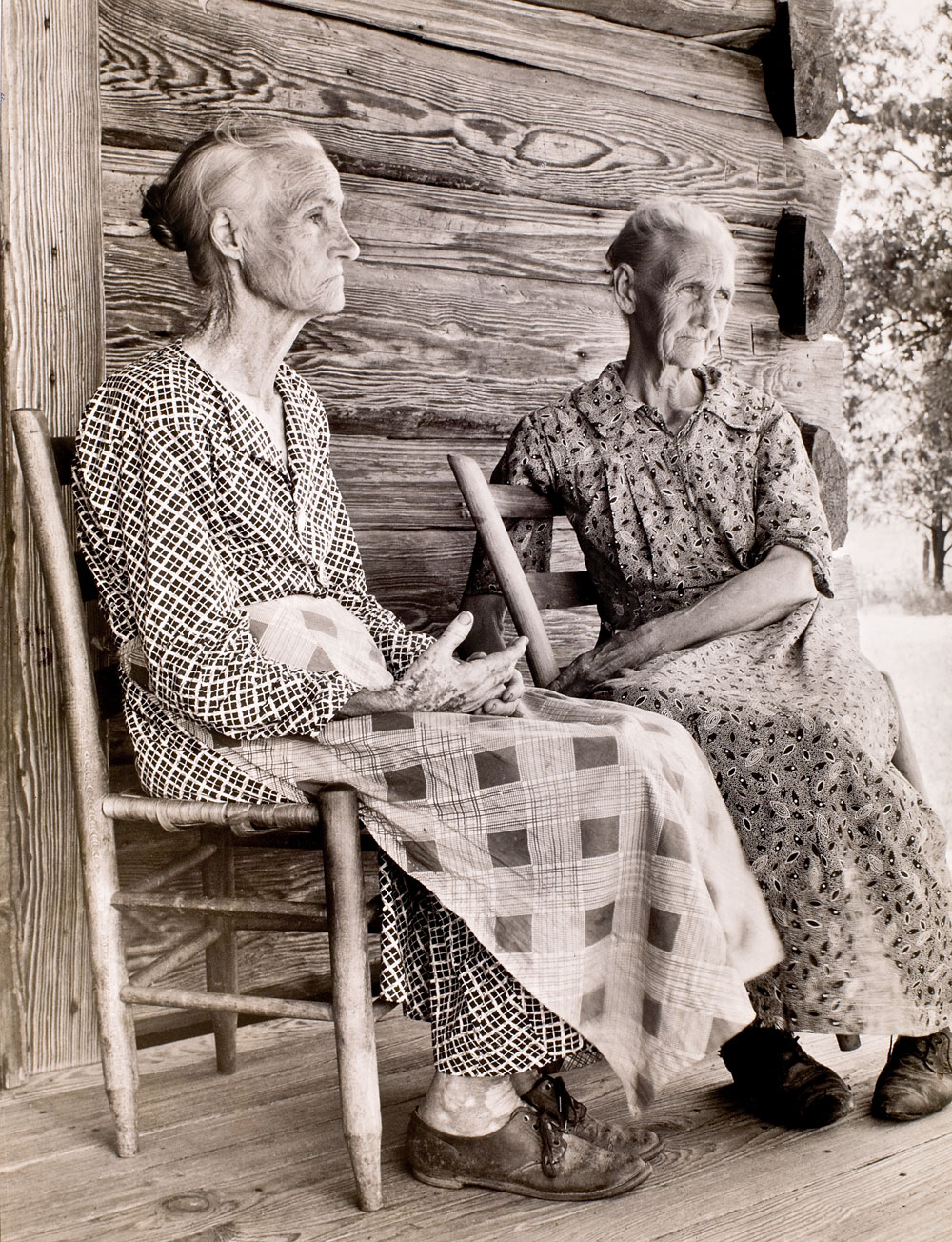
- Fig. seven: Margaret Bourke-White (1904–1971), Two Old Women, from You Have Seen Their Faces (by Erskine Caldwell and Margaret Bourke-White, pub. 1937). Gelatin argent print on paper, 13-ane/viii x nine-7/eight inches. Gibbes Museum, Charleston, S.C., Souvenir of Robert W. Marks (1974.012.0016).
Photographer Margaret Bourke-White (1904–1971) also traveled through the South in the 1930s. Like many of the famed photographers of the era, Bourke-White worked in a documentary style to capture the devastating effects of the Nifty Low (Fig. seven). Bourke-White was one of the first women to break into the male-dominated field of photojournalism. In 1929 she was hired every bit the first staff lensman for Fortune magazine. In 1936 she was hired as the get-go female person photojournalist for Life magazine and one of her photographs appeared on Life magazine's commencement cover in 1936. Throughout her career Bourke-White broke records: she was the showtime Western lensman immune into the Soviet Union, and the first female war contributor during World State of war Two.
On the heels of Globe War 2, the focus of the art world shifted for the first time from Europe to America, where Abstruse Expressionism flourished in New York City from the mid-1940s through the 1950s. Dominated by artists such equally Jackson Pollock, Willem de Kooning, and Robert Motherwell, women similar Lee Krasner and Joan Mitchell also participated in the movement, but received relatively picayune recognition. Though Charleston remained a stronghold of traditional artistic styles, a number of artists bankrupt with tradition; among them was Corrie McCallum (1914–2009). Though she and her family chose to settle in Charleston, McCallum followed the development of Abstract Expressionism and incorporated the manner into her work. McCallum's circa-1965 painting View of Toledo (Fig. viii) retains recognizable subject affair but demonstrates her involvement in abstraction through her gestural brushwork and reduction of forms.
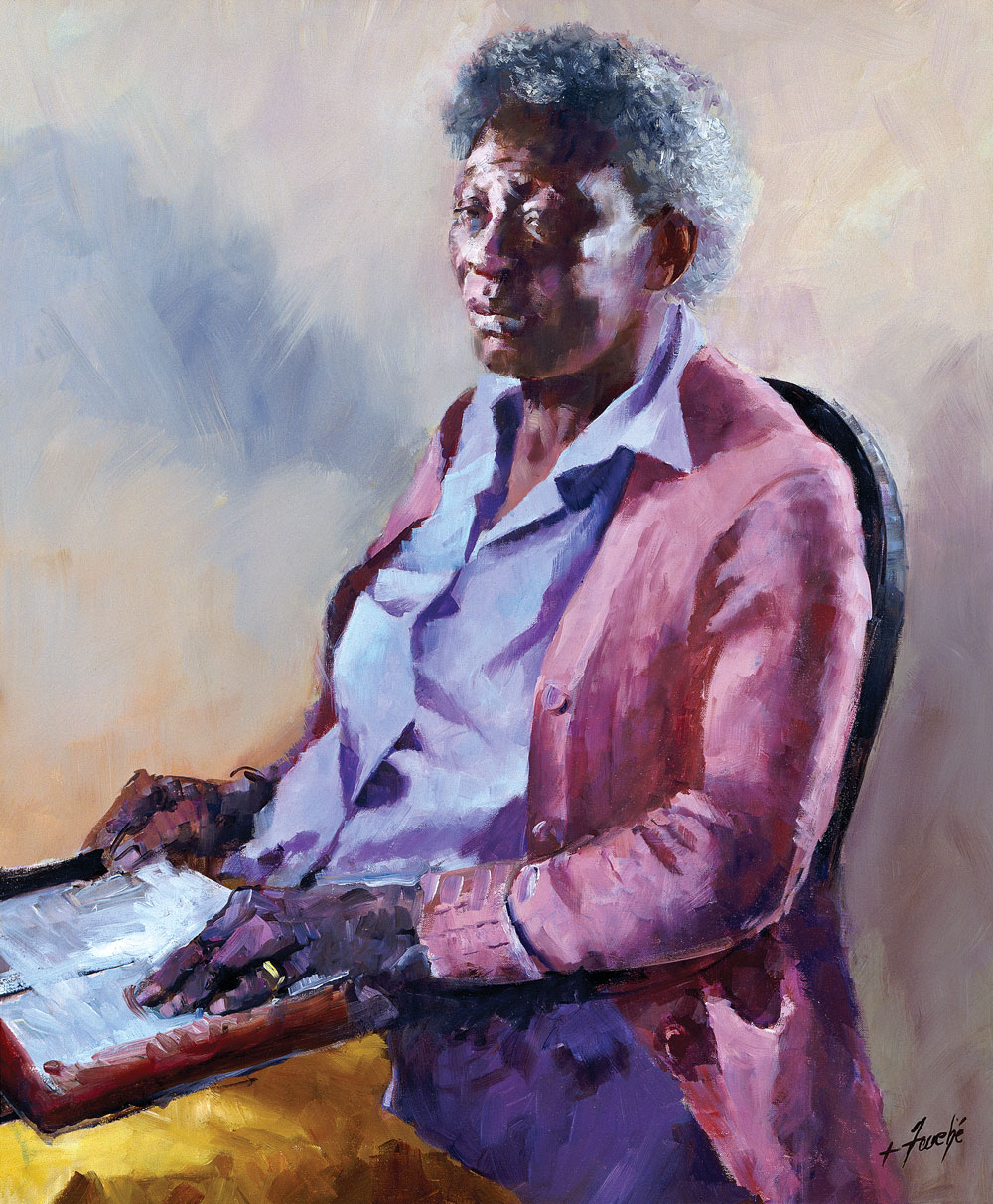
In addition to her vast body of piece of work, McCallum fabricated significant contributions to the Charleston art community as an educator; another common theme amidst women artists, many of whom taught in social club to back up themselves and their families. McCallum held education positions at several institutions, and throughout her life remained an outspoken advocate for the visual arts. Creative person Virginia Fouché Bolton (1929–2004) was an arts educator in the Charleston area known for her dedication to her students (Fig. 9).
-
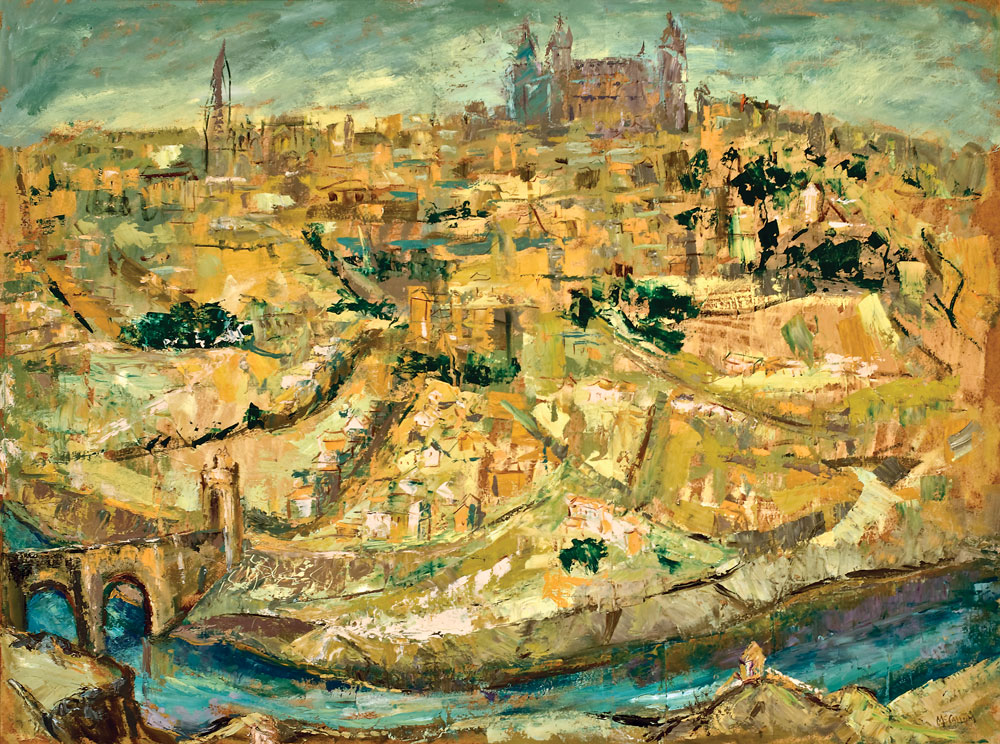
- Fig. 8: Corrie McCallum (1914–2009), View of Toledo, ca. 1965. Oil on masonite, 42-seven/viii x 54-3/four inches. Gibbes Museum, Charleston, S.C., Gift of Dr. and Mrs. Charles P. Summerall Iii (1983.026).
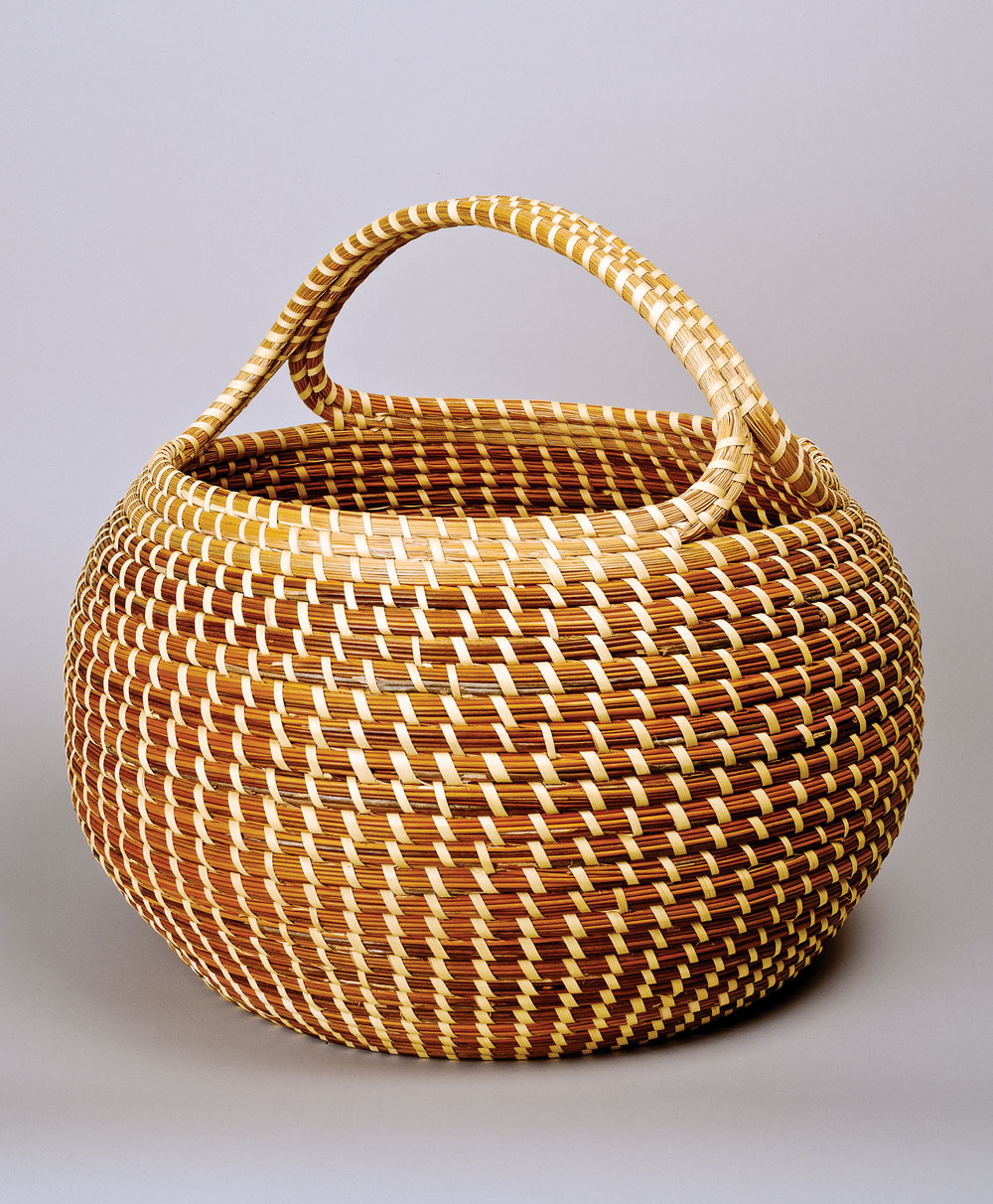
Today, a number of significant women artists piece of work in Charleston and contribute to its thriving art community. Mary Jackson (b. 1945), a 2008 MacArthur Foundation Fellow, is a nationally recognized master of sweetgrass basketry. Brought to America from West Africa during the early days of slavery, the art form has been in continuous production since the eighteenth century and is considered one of the oldest art forms of African origin in America today. Providing a link to African heritage, Jackson learned the fine art form from her female parent and grandmother and is known for her highly inventive forms (Fig. 10).
Amongst the younger generation working in the city is Jill Hooper (b. 1970), an artist grounded in the techniques of the Old Masters, who paints from life with natural light and mixes her own pigments (Fig. 11). Engagement with her subject matter is essential to Hooper'south process and carries through in her finished work—whether it be the psychological intensity conveyed by a sitter or the delicate residual betwixt life and death communicated through the decaying fruit of a nevertheless life. Hooper gained notice at an early on age, and in 2000, at the age of xxx, she became the youngest living artist to be included in the Gibbes drove.
|
|
-
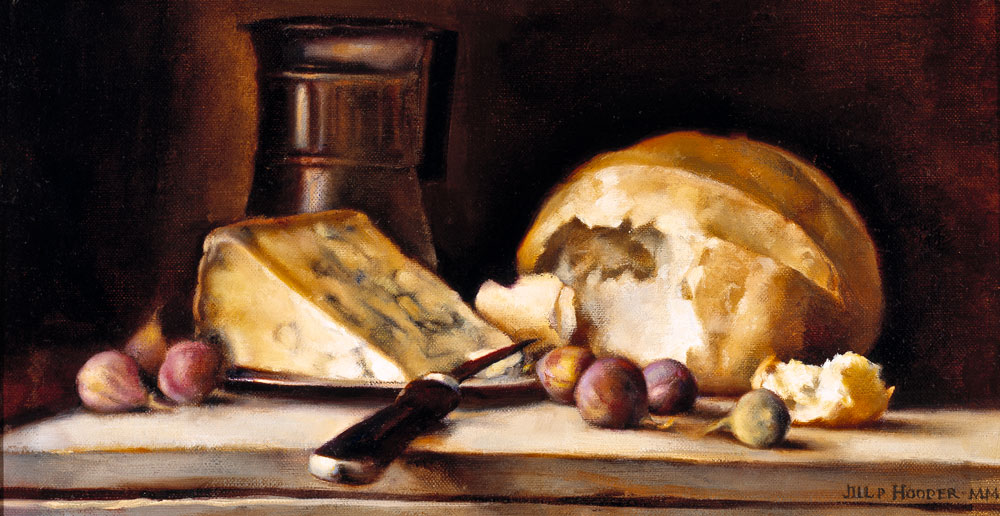
- Fig. 11: Jill Hooper (b. 1970), Remains of a Meal, 2000. Oil on linen, 16 x 23 inches. Gibbes Museum, Charleston, Southward.C., Museum purchase with funds provided by a gift of the Charleston Fine Fine art Dealers Association (2000.026).
As evidenced by the Gibbes collection, museums take played a crucial role in preserving piece of work created past women and in helping to advance the careers of gimmicky female artists. The work beingness created today by women artists in Charleston and throughout the The states stands as a attestation to the women of past generations who defied convention and paved the way for women to achieve success as professional artists.
Breaking Down Barriers: 300 Years of Women in Art, was on view October 28, 2011, through January 8, 2012, at the Gibbes Museum of Fine art, Charleston, Due south Carolina. For data phone call 843.722.2706 or visit www.gibbesmuseum.org
Pamela S. Wall is the curator of exhibitions at the Gibbes Museum of Fine art, Charleston, South Carolina.
This article was originally published in the Fall/Winter 2011 upshot of Antiques & Fine Art mag, a fully digitized version of which is available at www.afa.mag.com. AFA is affiliated with Incollect.
one. See Linda Nochlin, "Why Have In that location Been No Great Women Artists?" in Women, Art, and Power and Other Essays (New York: Harper & Row, 1988). Several exceptions exist, including the seventeenth-century Italian painter Artemisia Gentileschi and the eighteenth-century Swiss-built-in painter Angelica Kauffman. Even then, their success was indebted to the help of men who enabled their careers to develop and flourish.
2. Quoted in Martha R. Severens, "Who Was Henrietta Johnston?" The Mag Antiques CXLVIII, no. v (November 1995): 707.
Source: https://www.incollect.com/articles/breaking-down-barriers-300-years-of-women-in-art
0 Response to "What Barriers Do Women Artists Face Today in Developing Professional Careers in the Visual Arts?"
Post a Comment